
Share Your Story
Be Part of the MK Umbrella Project Legacy
Stage one of the MK Umbrella Project has been realised!
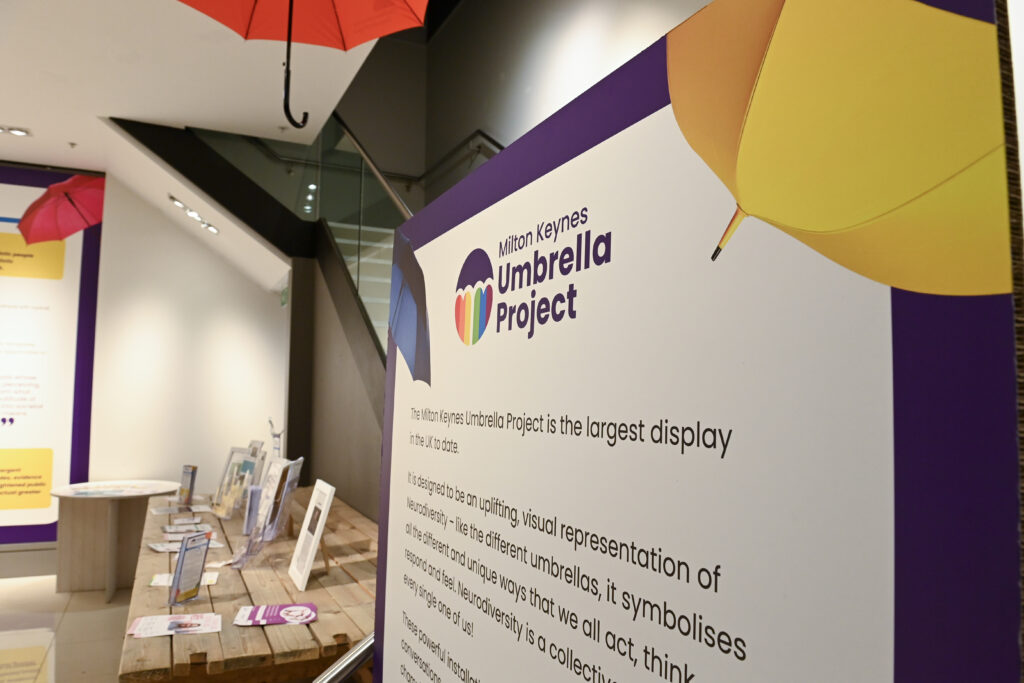
The rainbow-coloured canopy of 400 umbrellas installed in Midsummer Place Shopping Centre, is an unmissable display to be freely enjoyed by 1000’s visitors for six months from March 2025; it embraces and celebrates Neurodiversity in Milton Keynes.
However, we recognise that changing perceptions and starting the shift in our culture towards becoming a neuro-inclusive city is a longer-term commitment.
For the Umbrella Project to be the catalyst for change, it must inspire and encourage local people to have the confidence to share their own stories and experiences, so together we can bust-myths, celebrate differences and challenge preconceptions – the human race is neurodiverse, so it’s important we can normalise talking about it.
We would like to invite you to support us to continue the legacy of the Umbrella Project, by sharing your stories and experiences with us:
- Are you neurodivergent? What has your experience been like?
- Is someone close to you—your child, parent, partner, or friend—neurodivergent?
- Or are you neurotypical and want to share your experiences of neurodiversity?
Whatever your story, we’d love to hear from you. In return, we’re offering one of a limited number of exclusive, limited-edition umbrellas — one of the 400 currently on display in the Boulevard at Midsummer Place — to people who submit their real experiences. With an invitation to collect your umbrella from Midsummer Place Shopping Centre, during it’s 25th anniversary celebrations on Saturday 27th September 2025.
This is your chance to make your voice heard and celebrate the importance of neurodiversity and inclusion in our community.
Shannon
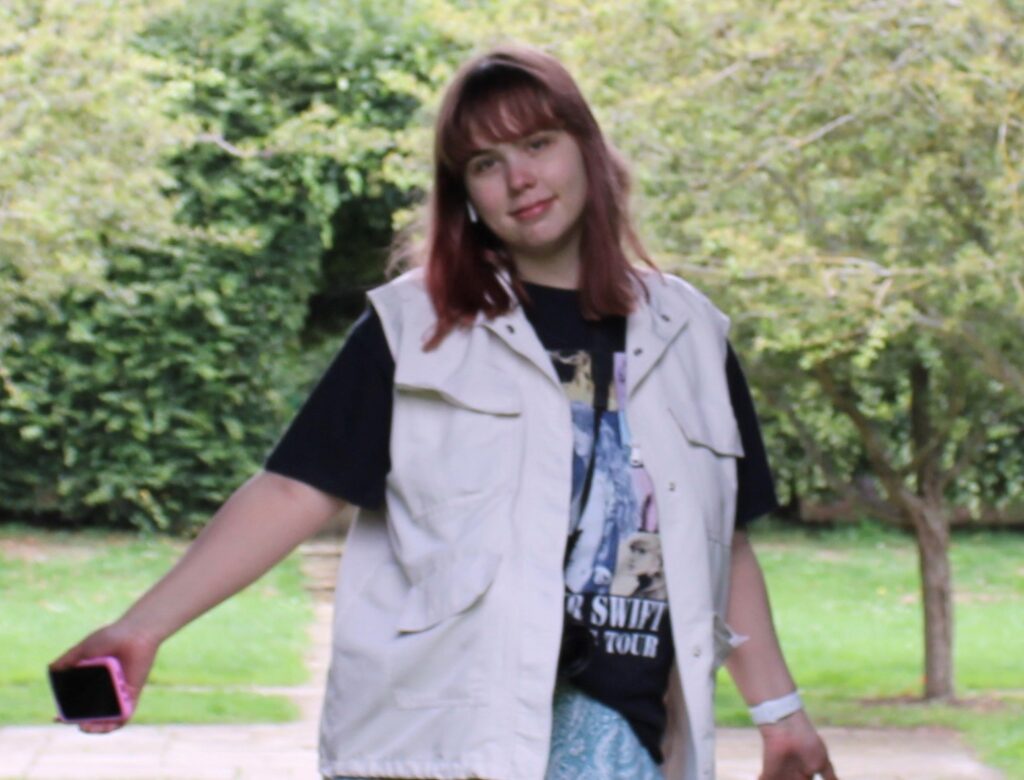
I am an autistic and dyslexic 24 year old. I’ve always lived in MK. My sister is autistic as well. I have always struggled with my difficulties and anxieties, was homeschooled as I couldn’t handle mainstream.
Last year, I was offered the opportunity to enrol in a programme with Lets Kick It to further my photography skills and gain new ones, while also helping me handle my anxiety. 1 year later, I have made new friends, I actually left my house, I got a part time employment with them that they allow me to work around my challenges. And Ive really been show acceptance and that I dont need to hide who I am.
I also run an Instagram called @shannonreevesthephotographer. Where I highlight what I do to show other neurodivergent people that they can be who they want to be.

Lucy
All my life I felt different, I didnt understand why I wasnt like everyone else. Why did I struggle with day dreaming, sounds, tastes/textures, eye contact, making friends, physical contact, staying on task, emotional dysregulation and so much more.
Four years ago a consultant was telling me why he was diagnosing my daughter autistic at the age of 3. One of the reasons was because she didnt play with others. I questioned this and said well I didnt as a child either, Ive always preferred to be on my own. He then asked me a few questions which resulted in him telling me he thought I should be referred for an autism assessment.
Three years later I was diagnosed autistic and ADHD. I have blossomed since being diagnosed, unmasking to see who I truly am, not who I thought I was supposed to be. There wasnt enough awareness when I was growing up, especially not for women and girls. After I was diagnosed I grieved the person I could have been if I had known my disabilities but now I share awareness so girls dont continue to be missed.
I hope I can be a good role model for my daughter, I hope she will know that her differences make her extraordinary.
Sophie
Always felt like I didn’t fit in being the one that was loud and making people laugh was just a cover or a hyperactive outburst, to then being alone and over thinking every conversation I had that day wondering was I too much was I to loud.
Feeling extremely upset about being left out even if it wasn’t intentional all these feeling plus many others left me feeling sad and low and diagnosed with depression until I was diagnosed with ADHD which to me it all clicked as to why I can’t do one task at a time and why I struggle socially I had so many answers to all my struggles.

Rachel
My daughter has dyslexia and once she had a diagnosis I realised why she had found reading and school so hard. Its not just a problem with spelling but short term memory so she has a great vocabulary but finds it very hard to spell. Once she has been given extra time for exams that helped but the real game changer was getting a scribe for A levels. She could talk and answer the questions and someone else wrote her answers down so she did not have to worry about spelling.
She then went to university and again with the right support graduated with a first. She has software to dictate her answers for the exams and this enabled her to get a degree and a well paid job. All schools should test every child for dyslexia so they can support them. The biggest problem before her diagnosis was her lack of self esteem she felt stupid even though she knew the answers she could not write them down.